

Howard Berkes
Howard Berkes is a correspondent for the NPR Investigations Unit.
Since 2010, Berkes has focused mostly on investigative projects, beginning with the Upper Big Branch coal mine disaster in West Virginia in which 29 workers died. Since then, Berkes has reported on coal mine and workplace safety, including the safety lapses at the Upper Big Branch mine, other failures in mine safety regulation, the resurgence of the deadly coal miners disease black lung, and weak enforcement of grain bin safety as worker deaths reached record levels. Berkes was part of the team that collaborated with the Center for Public Integrity in 2011 resulting in Poisoned Places, a series exploring weaknesses in air pollution regulation by states and EPA. In 2015 and 2016, Berkes collaborated with ProPublica on Insult to Injury, a series of stories about a "race to the bottom" in workers' compensation benefits across the country, which won the IRE Medal from Investigative Reporters & Editors, the nation's top award for investigative reporting, among other major journalism awards. Berkes has garnered four IRE awards for investigative reporting since 2014.
Before moving to the Investigations Unit, Berkes spent a decade serving as NPR's first rural affairs correspondent. His reporting focused on the politics, economics, and culture of rural America. Based in Salt Lake City, Berkes reported on the stories that are often unique to non-urban communities or provide a rural perspective on major issues and events. In 2005 and 2006, he was part of the NPR reporting team that covered Hurricane Katrina, emphasizing impacts in rural areas. His rural reporting also included the effects of the wars in Afghanistan and Iraq on military families and service men and women from rural America, including a disproportionate death rate among troops from rural areas. Berkes has covered the impact of rural voters on presidential and congressional elections.
Berkes has also covered eight summer and winter Olympic games, beginning with the 1984 Summer Olympics in Los Angeles. His reporting in 1998 about Salt Lake City's Olympic bid helped transform a largely local story about suspicious payments to the relatives of members of the International Olympic Committee into an international ethics scandal that resulted in Federal and Congressional investigations.
Berkes' Olympic and investigative reporting have made him a resource to other news organizations, including The PBS Newshour, CNN, MSNBC, A&E's Investigative Reports, the British Broadcasting Corporation, the French magazine L'Express, Al Jazeera America and others.
In 1981, Berkes became one of NPR's first national reporters and was based in Salt Lake City, where he pioneered NPR's coverage of the interior of the American West and public lands issues. He traveled thousands of miles to every corner of the region, driving ranch roads, city streets, desert washes, and mountain switchbacks, to capture the voices and sounds that give the region its unique identity.
Berkes' stories are heard on Morning Edition, All Things Considered, and Weekend Edition, and he has served as a substitute host of Morning Edition and Weekend All Things Considered.
An easterner by birth, Berkes moved west in 1976, and soon became a volunteer at NPR member station KLCC in Eugene, Oregon. His reports on the 1980 eruptions of Mt. St. Helens were regular features on NPR and prompted his hiring by the network. Berkes is sometimes best remembered for his story that provided the first detailed account of the attempt by Morton Thiokol engineers to stop the fatal 1986 launch of the Space Shuttle Challenger. Berkes teamed with NPR's Daniel Zwerdling for the report, which earned a number of major national journalism awards. In 1989, Berkes followed up with another award-winning report that examined the efforts to redesign the Space Shuttle's rocket boosters.
In 2016, Berkes revisited the 1986 Challenger story with an update on one of the booster rocket engineers who tried to stop the Challenger launch and who was an anonymous source in the Berkes-Zwerdling report. The engineer, 89-year-old Bob Ebeling, was frail and in hospice care when he told Berkes that he still shouldered guilt for the deaths of the Challenger astronauts. The resulting story prompted hundreds of NPR listeners and readers to write supportive messages, which helped ease Ebeling's guilt. He died a few weeks later – at peace, his family said.
A multi-year investigation of a resurgence of black lung disease among coal miners, and an epidemic of the most severe stage of the disease, resulted in a PBS Frontline television documentary in January 2019, which included Berkes as on-air correspondent and narrator.
Berkes has covered Native American issues, the militia movement, neo-nazi groups, nuclear waste, the Unabomber case, the Montana Freemen standoff, polygamy, the Mormon faith, western water issues, mass shootings, and more. His work has been honored with more than 40 major journalism awards, including those given by the American Psychological Association, the American Association for the Advancement of Science, the Society of Professional Journalists, the Robert F. Kennedy Memorial, the Joan Shorenstein Center at Harvard University, the Online News Association, the National Press Club, the Society of American Business Editors and Writers, the Nieman Foundation for Journalism at Harvard, the UCLA Anderson Loeb Awards, and the National Association of Science Writers.
Berkes also won five Edward R. Murrow Awards for investigative, sports, feature, and online audio reporting.
Berkes has trained news reporters in workshops across the country and served as a guest faculty member at the Poynter Institute for Media Studies. In 1997, he was awarded a Nieman Foundation Journalism Fellowship at Harvard University.
-
 Forty years after the Challenger disaster, NPR explores the engineers' last-minute efforts to stop the launch, their decades of guilt and the vital lessons that remain critical for NASA today.
 -
 Addressing a problem first identified 50 years ago, federal regulators say stricter new rules to limit miners' exposure to silica dust are expected to finally go on the books on Tuesday.
 -
 For decades, miners have called for limits on highly toxic silica dust, which they're exposed to while mining. An investigation shows its impact and the weakness of proposed rules to protect them.
 -
 Allan McDonald, who directed the booster rocket project at NASA contractor Morton Thiokol, urged delaying the launch of the space shuttle before it exploded in 1986. He has died at age 83.
 -
 The power of family history can lead a person to do a lot of things. For Howard Berkes, the family tradition of facing crises head-on led him to sign up for experimental testing of a COVID-19 vaccine.
 -
 Howard Berkes covered the 1980 eruptions of Mount St. Helens for NPR and has returned to the volcano for multiple stories over the years. He recalls the massive blast and its aftermath.
 -
Al Haynes has died at age 87. He was the captain of United flight 232 when it crashed in Sioux City, Iowa, in 1989 after total hydraulic failure. 184 of 296 people survived.
-
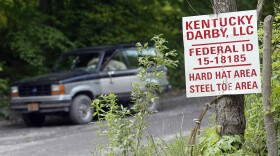 A Labor Department audit found no correlation between the federal system that fines mining companies for unsafe conditions and safety in mining operations.
 -
 Coal miners will press members of Congress to fully restore a coal excise tax that supports miners diagnosed with black lung. The tax was cut more than 50% at the end of last year.
 -
 A top mine safety regulator testified before Congress that no new regulations are needed to protect workers from deadly silica dust, despite an epidemic of advanced black lung disease.


